
Coal‑Fired Steam Boilers in Heavy Industries: Advantages and Disadvantages
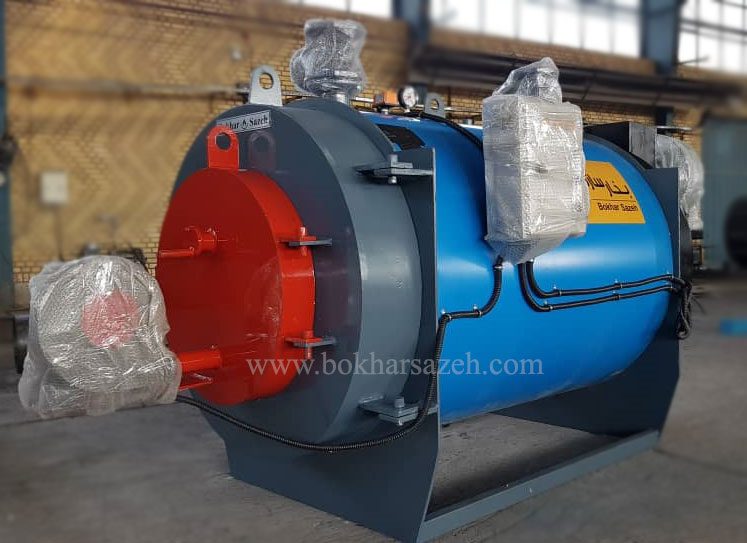
Coal‑fired steam boilers are considered one of the oldest yet still widely used technologies for steam generation in heavy industries. Despite the development of gas‑fired and oil‑fired systems, coal‑fired boilers are still used in many sectors such as steel production, cement manufacturing, power plants, mining industries, and some petrochemical facilities. This is mainly due to the relatively low cost of coal and its wide availability, which makes it an economically viable fuel source for large‑scale industrial operations.
In this article, we examine the advantages and disadvantages of coal‑fired steam boilers, including their applications, efficiency, operating costs, and limitations in heavy industries.
What Is a Coal‑Fired Steam Boiler?
A coal‑fired steam boiler is a type of industrial boiler that generates thermal energy by burning coal in a combustion furnace and transfers this heat to water to produce steam at a specific pressure and temperature. The produced steam is widely used in industrial processes, steam turbines, large‑scale heating systems, and various production lines.
In these boilers, the combustion system typically includes a mechanical burner or coal feeding system, a combustion chamber, flue gas passages (heat passes), and emission control equipment.
Applications of Coal‑Fired Steam Boilers in Heavy Industries
Coal‑fired boilers are commonly used in industries that:
- Have very high steam consumption
- Require an inexpensive and readily available fuel source
- Face limitations in natural gas supply
- Are located in mining or heavy industrial regions
Major Industries Using Coal‑Fired Steam Boilers
- Paper manufacturing plants
- Steel production and metal smelting industries
- Cement factories
- Thermal power plants
- Chemical and mining industries
Advantages of Coal‑Fired Steam Boilers
1. Low Fuel Cost
One of the main advantages of coal‑fired steam boilers is the relatively low price of coal compared to many other fossil fuels. In large industrial facilities with high steam demand, fuel costs represent a significant portion of operational expenses. Therefore, using coal can help reduce overall production costs.
2. Easy Fuel Availability in Certain Regions
In mining areas or countries with abundant coal resources, coal is often easier to obtain than natural gas or liquid fuels. This availability allows industrial plants to operate with less dependence on gas supply networks.
3. Suitable for High‑Capacity Applications
Coal‑fired steam boilers are usually designed for large‑scale operations. They are capable of producing high volumes of steam at high pressure and flow rates, making them suitable for heavy industries that require continuous steam generation.
4. Use in Power Generation Projects
In thermal power plants, coal‑fired boilers are among the most common systems used to generate steam that drives steam turbines for electricity production.
5. Long Service Life with Proper Maintenance
Due to their robust construction and industrial design, coal‑fired boilers can have a long operational lifespan when properly maintained and regularly cleaned to prevent scale buildup and deposits.
Disadvantages of Coal‑Fired Steam Boilers
Despite their advantages, these systems also present several limitations and challenges that should be carefully evaluated before installation.
1. High Environmental Emissions
Coal combustion produces pollutant gases such as SO₂, NOx, and particulate matter. Therefore, emission control systems such as cyclones, bag filters, or scrubbers are required. These systems increase both the initial investment cost and ongoing maintenance expenses.
2. Larger Space Requirements
Coal storage facilities, fuel handling systems, and ash disposal equipment require significantly more physical space compared with gas‑fired boilers. This factor must be considered during plant design and layout planning.
3. Higher Maintenance Costs
Because coal combustion produces ash and soot, frequent cleaning of heat transfer surfaces and the furnace is necessary. Without proper maintenance, the boiler’s efficiency decreases and equipment wear increases.
4. More Complex Combustion Control
Maintaining the correct air‑to‑fuel ratio in coal‑fired systems is more complex than in gas‑fired burners, and it often requires experienced operators and more sophisticated control systems.
5. Lower Efficiency Compared to Some Modern Systems
Compared with advanced gas‑fired boilers, the thermal efficiency of some coal‑fired boilers may be lower unless they incorporate advanced designs such as three‑pass systems or heat recovery technologies.
Comparison of Coal‑Fired and Gas‑Fired Steam Boilers
Feature | Coal‑Fired Boiler | Gas‑Fired Boiler
Fuel Cost | Lower | Higher
Emissions | Higher | Lower
Maintenance | More complex | Simpler
Space Requirement | Larger | Smaller
Combustion Control | More difficult | Easier
Choosing between these two systems depends largely on project conditions, regional fuel prices, and environmental regulations.
Is a Coal‑Fired Steam Boiler the Right Choice?
Using a coal‑fired boiler can be a practical option if the industrial project has the following conditions:
- Easy and low‑cost access to coal
- High steam demand
- Capability to install emission control equipment
- Adequate space for fuel storage
On the other hand, in projects with strict environmental regulations or limited space, gas‑fired or dual‑fuel boilers may be more suitable options.
Important Considerations When Selecting a Coal‑Fired Boiler
When purchasing or designing a coal‑fired boiler, the following factors should be considered:
- Steam production capacity (kg/hr or ton/hr)
- Operating pressure (bar)
- Heat‑pass design (three‑pass or more)
- Type of combustion system (manual or automated)
- Ash collection system
- Emission control equipment
- Actual thermal efficiency
Selecting a reliable manufacturer and ensuring compliance with engineering and safety standards are also crucial for the performance and safe operation of the system.
Conclusion
Coal‑fired steam boilers remain an economical solution for high‑capacity steam generation in many heavy industries. Their relatively low fuel cost and ability to produce large volumes of steam are key advantages. However, higher emissions, greater space requirements, and more complex maintenance are among the main challenges associated with this technology.