
Heat Exchangers
- High-quality, safe products utilizing the latest global technology.
- Comprehensive warranty and after-sales service for all products.
- Nationwide shipping across Iran and exports to neighboring countries.
- 20+ years of manufacturing expertise
Bakharsazeh heat exchangers are designed and manufactured according to customer requirements, in various sizes and capacities, under the supervision of our technical experts.
For pricing and technical consultation, please contact our sales department.
38450864(9851+) (09151678840)Product Overview
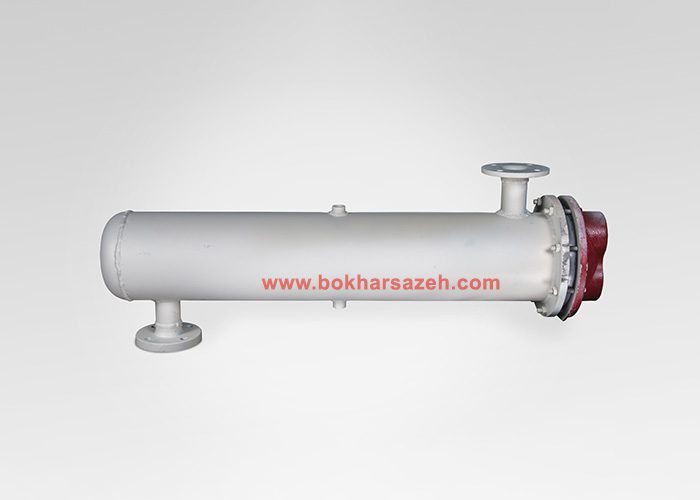
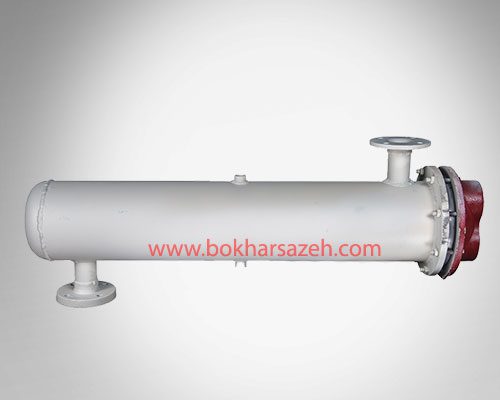
A shell and tube heat exchanger is a high-efficiency device designed to transfer thermal energy between two fluids (liquids or gases) at different temperatures.
Working Principle
The system operates by circulating one fluid through a series of tubes while the second fluid flows through the surrounding shell. This configuration allows for optimal heat transfer as the fluids exchange energy through the surface area of the tubes.
Construction
Our units are constructed using a durable steel or cast iron shell, containing a bundle of high-conductivity copper tubes. This robust design ensures efficient heat exchange and long-term durability in various industrial applications.
Applications of Heat Exchangers
Heat exchangers are widely used in:
- Refineries
- Power plants
- Central boiler rooms and mechanical rooms
- Refrigeration systems
- HVAC (heating, ventilation and air conditioning) systems, and many other industrial and commercial installations.
Some of the most common heat exchangers we encounter in daily life include:
- Automotive radiators
- Residential radiators (central heating systems)
- Household refrigerators
Shell and Tube Heat Exchanger
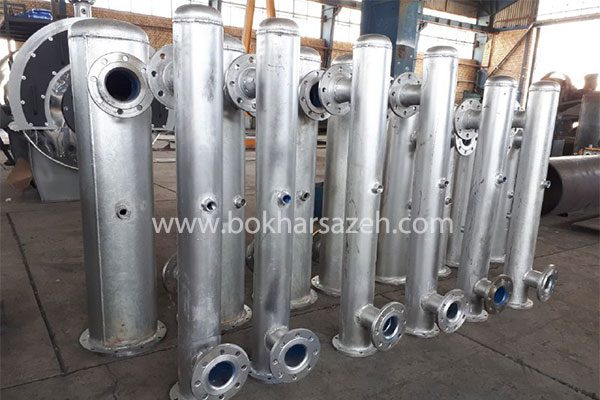
One of the most commonly used types in building services, swimming pool heating systems, and industrial installations is the shell and tube heat exchanger.
The coils used inside these units are made of copper tubes, which provide a very high heat transfer coefficient and significantly improve the overall efficiency of the exchanger.
By applying the principle of counter-flow (reverse flow direction) and using multiple baffles inside the shell, maximum turbulence and contact time are created, resulting in optimal thermal performance for Bakharsazeh heat exchangers.
All types of shell and tube heat exchangers are supplied with a 2-year Bakharsazeh warranty.
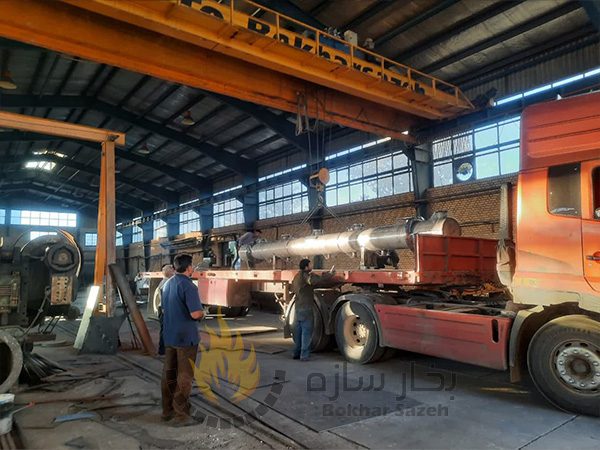
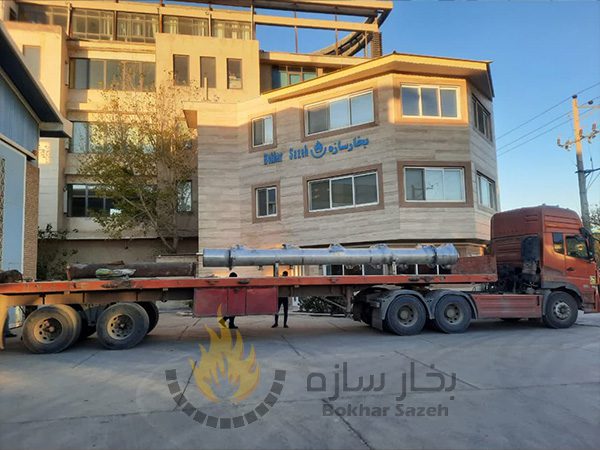
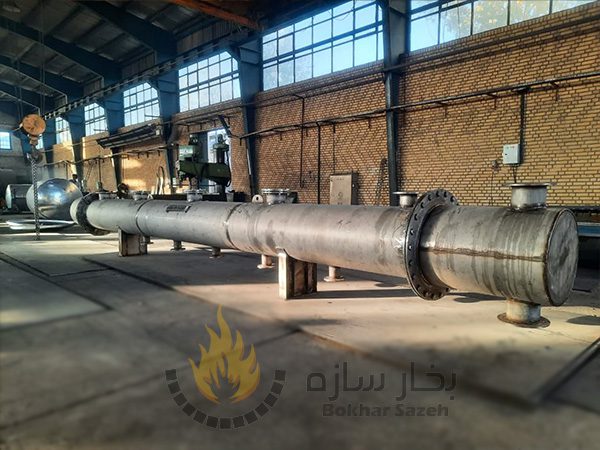
تولید مبدل حرارتی ر محل نصب کارخانه روغن کشی خجند تاجیکستان
Types of Heat Exchangers
Heat exchangers are categorized based on the following criteria:
- By the type and contact surface of fluids: (Direct/Indirect contact)
- By the fluid flow direction: (Parallel, Counter-flow, or Cross-flow)
- By the heat transfer mechanism: (Phase change or single-phase)
- By mechanical configuration and construction: (e.g., Shell and Tube, Plate, etc.)
Diverse Industrial Applications
Heat exchangers are essential in various sectors, including process industries, power generation, HVAC, refrigeration, heat recovery, and manufacturing.
- Power Plants: Utilize various fossil-fuel boilers, nuclear steam generators, steam condensers, regenerators, and cooling towers.
- Process Industries: Use two-phase flow exchangers for evaporation, distillation, crystallization, and as fluidized beds for catalytic reactions.
- HVAC & Refrigeration: Rely on high-performance condensers and evaporators.
Advantages of Shell and Tube Heat Exchangers
- High Surface-to-Volume Ratio: Providing a large heat transfer area in a compact design.
- Superior Mechanical Design: Built to withstand high pressures and thermal stresses.
- Well-Established Manufacturing Standards: Proven technology with predictable performance.
- Material Versatility: Compatible with a wide range of materials to handle various fluids.
- Easy Maintenance: Designed for easy cleaning and tube inspection/replacement.
Reviews
There are no reviews yet.